
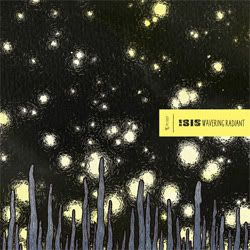
Wavering Radiant (2009)
One thing that Wavering Radiant does immediately is expose the weaknesses of In The Absence of Truth. Not that Absence was a bad album by any stretch, but it was missing that certain whatever-it-is that made you feel as if repeated listens would continue to reveal new and exciting subtleties. There were certainly good songs on there, but since its release in the fall of 2006, I haven't been back to hear them again. Exposing Absence's weaknesses is about the only thing that Wavering Radiant does immediately. You know that it is a stronger album when you hear it, but the magnitude of that strength takes a while to gauge. Even after several weeks of ownership I still wasn't sure where I'd place it in the hierarchy of Isis albums from best to worst.
Admittedly, my first few listens revealed a certain sense of staleness; that feeling that they as a band and I as a listener had been down this road one too many times before. Isis aren't a band known for sea changes between albums, and over time it seems like the differences that do exist from one album to the next is getting harder to spot, and perhaps is almost nonexistent; and that is especially pertinent here. Wavering Radiant presents the same basic formula as their other works as of late: the crystalline guitar tones, predictable clean vocal/growl variations, long post-rock buildups withs sludge crescendos, the token ambient album break. Even if you haven't heard this particular album before but have heard their previous work, chances are Wavering Radiant sounds eerily similar to how you thought it might sound, which is obviously a little disappointing if you were looking for more significant growth.
But there's something about this album that kept bringing me back. Once the initial disappointment faded, I actually discovered some nice touches here once I paid attention to the details. A lot of merits can be given to the production, which is getting more and more layered and complex to a degree that, to be honest, I notice but don't quite understand. Isis have experimented with sound on previous albums, but this one finds them taking those tricks a bit further, and with mostly positive results. You'll notice this immediately in the start of songs like "Ghost Key" and "20 Minutes/40 Years", even if they are eventually buried by Isis' standard song development methods.
In the end, Wavering Radiant is just good enough to satisfy me as a fan, but without some noticeable adjustments in the future this will likely be the last time I'll be able to say that with any level of sincerity.
Score: 6.5/10
"Hand of the Host"
"20 Minutes/40 Years"
Friday, August 14, 2009
Isis - Wavering Radiant (2009)

Friday, August 7, 2009
The Mars Volta - Octahedron (2009)
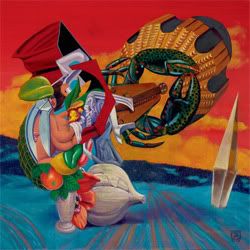
Octahedron (2009)
Reviewing Mars Volta albums feels slightly pointless. Chances are, you've already got your opinion of the band and it's not really going to change. So eff that; instead of reviewing Octahedron outright, I'll share some personal thoughts inspired by listening to Octahedron -- which will likely be barely distinguishable from a proper review, but that's neither here nor there. For what it's worth, though, I will say that this album is a slightly different beast than their recent work, and that if there is any Mars Volta album that will change peoples' minds about them, or reengage any wayward fans, then this would be it. If you were not keen on the pointlessly long solos, chaotic drumming and guitar playing, and general prog-rock indulgences, you may like what they've come up with for Octahedron. At 8 songs and 50 minutes long, this is easily their most straightforward, digestible album yet. Inversely, if you were a fan of the long solos and chaos, you may not like Octahedron all that much. And that's all I have to say about that.
I've always positioned Mars Volta as the kind of band that I would eventually grow out of. They provided some good music and memories for my younger days, but their brand of rambunctious prog-rock was surely bound to work its way through my system as the process of my maturing musical tastes simultaneously coincided with their inevitable decline in quality (though can you ever tell which is occurring faster, if at all?). It's no wonder, then, that I've approached their last few albums with a bit of hesitation, none more so than Octahedron. I saw it sitting on the New Releases wall at the record store, stacked next to new albums by Green Day, Depeche Mode, Eminem, Mos Def, Marilyn Manson, Dave Matthews Band, Iron Maiden, and other such artists past their prime (arguments on whether some of those artists ever had a prime will be heard at a later date), and wondered about the kind of people who buy those records. How much do they really expect these new albums to live up? It's not because those artists are still making classic material, I decided, but it's more of a comfort issue. The listener knows what they're gonna get. The purchase doesn't require them to take any risks and there's little uncertainty as to how it will sound. Certainly I'd never fall into such a habit, right? Right? Wrong. Because there I was, doing exactly that with the Mars Volta.
So what does it mean if I tell you that Octahedron is a great album? Or if I add that it's their best since De-loused In The Comatorium? I believe that I mean it, but there's that nagging feeling that I may merely be trying to justify my continued support of a band that many of my friends no longer listen to. That I'm not listening to them because they are still good, but because they have only done a good job at reminding me of how I felt when I first heard them when I was younger. On that note: does how much a new album reminds you of a past good album mean that the new one is good too? Is Octahedron successful in my eyes because it sounds the most like their earlier material, or because it is an honestly well-written, well-performed, and well-executed album? The more I think about it, the more I think the answer to those questions don't really matter, and that it's a lose-lose situation to try to provide a completely objective opinion of a band with as polarizing a history as The Mars Volta.
I walked out of the record store with Octahedron feeling like the oldest 25-year old in the world. I was barely anticipating that the album would be worthwhile, yet I bought it anyway, realizing that I was now able to answer my own question: Did I really expect that this new album would live up? No. But maybe it would be good enough. Good enough to remind me of the old days (that really aren't very old at this point). Good enough to satisfy me for a short time. Maybe good enough to get me to buy their next record. And if I was lucky, it would be more than that.
In my eyes, Octahedron is more than that; and even if I do just have smoke in my eyes, I suppose there are worse aspects of aging than stubbornly supporting bands that you felt like you should've stopped caring about a long time ago. Besides thinking that 90% of teenagers are fucking retarded, supporting declining bands is about as "old" as I get...at this point.
Score: 8/10
"With Twilight As My Guide"
"Desperate Graves"
Tuesday, July 21, 2009
Ya Ho Wha - Penetration, An Aquarian Symphony (1974)
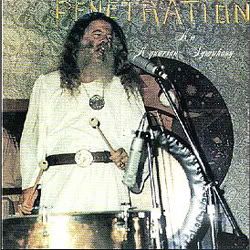
Penetration, An Aquarian Symphony (1974)
Living very literally up to the phrase "cult" band, Ya Ho Wa 13's recordings are the product of California's Source Family, one of the more well known and slightly less creepy hippie communes formed during the 1970's. Led by well-traveled weirdo Jim Baker (a.k.a Father Yod a.k.a Ya Ho Wha), the Source Family gained a large following which consisted of many musicians. With profits garnered from their popular vegan organic food restaurant on the Sunset Strip, the group recorded albums in a soundproof garage, completely unrehearsed in the early morning hours, and sold them in their restaurant under the name Ya Ho Wa 13.
Abstract. Meditative. Improvisational. All descriptions apply here. As such, I'm having trouble coming up with a review of something so thoroughly trance-inducing in nature, because with albums like this, the whole is always greater than the sum of its parts. Sure, I could probably talk about the haunting quality of Father Yod's nonsensical howling or the rhythmic taiko-like beat that is complimented by meandering psychedelic guitar strums, but I couldn't do so without sounding like a complete and udder tool. The songs are not really individual songs, but mere separations to mark the ends of certain movements before changing course slightly and building on a new rhythm. There are no individual moments. Swallow this one whole and enjoy. I'm sure there was a similar mindset going around within the Source Family (OOOOOHHHH!).
Score: 7.5/10
"Ho"
Saturday, June 27, 2009
Selda - Selda (1976)

Selda (1976)
The aging hippie at the register when I bought this while on vacation in Portland was totally unimpressed. I mean, I'm sure I'm not the only motherfucker who's ever come in there looking for Turkish rock, but certainly I'm one of a very small number, right? Right? "Oh yeah, Selda. Good choice. I really like the stuff she did later on that was just super avant garde, experimental psychedelic stuff. You should check it out. This one's more pop, but it's still good." Well, fuck you too, aging hippie. Sure, most people wouldn't have caught your subtle jab at my musical selection, but I'm on to you, buddy. Don't think I don't know what you meant by "pop". The word has resulted in fisticuffs between hardcore record elitists on more than one occasion. It's the equivalent of throwing down the gauntlet; a quick way of communicating that your musical tastes are waaaay more esoteric and that the challenger's attempts to dethrone you are admirable, yet weak. Fine, you win this round. I'll take my "pop" record, thank you very much, and maybe I'll rip it to my computer and put it on my iPod so I can listen to it while I'm at my job THAT ACTUALLY PAYS WELL AND PROVIDES HEALTH INSURANCE! Yeah. Maybe my wife will like it, too. That's right, I bet you don't have one of those either...dick.
Selda Bağcan was one of the premiere artists of the Anatolian rock movement in 1970's Turkey, which combined traditional Turkish folk with western-influenced rock (and even a bit of funk). She's the first artist who's music I just had to hear more of after I got rather addicted to the Turkish Psychedelic Music compilation courtesy of the good guys responsible for the Love, Peace & Poetry series. Hearing "İnce İnce Bir Kar Yağar" -- found both on this album and on the compilation -- it was hard not to be taken with her grating, raw, powerful vocal style. The sick, fuzzy saz riffs didn't hurt either, and luckily they're all over this album, because I love them. Just sick, fucking fuzz riffs all over the goddamn place from the first track on. Actually, the first track might have the best one; there's this one part where she stops singing and everything drops out, and she just starts shredding this hard ass fuzzy solo as if to say ,"Yeah, I'm kind of a badass", and I can't do anything but agree wholeheartedly. While there's certainly a good amount of fuzz, the album is actually pretty varied, with a couple of beautiful ballads that aim for use of softer instruments (like the silky violin-led "Dam Üstüne Çul Serer") as well as a few that incorporate some early electronics in with your traditional rock instrument fare.
Of course, it's all going to come down to her voice for most people. Selda's not exactly what you'd call a classically trained singer, and frankly, sometimes her voice can sound like very bad karaoke from a little boy, mid-tantrum. But dammit, she puts her heart into it and that's all I care about. A known political activist in Turkey, Selda's songs often contain politically charged lyrics that criticize government and military, and speak for the oppressed, struggling working class. Openly calling herself the "bitter sound of Turkish people", her vocal limitations aren't lost on her. Obviously, it doesn't bother me. She does a bang-up job conveying the emotions of the people she's speaking for, and sometimes what they have to say or how they say it isn't pretty. Let it bother you if it must, but you'd miss out on a great album in the process.
Score: 8/10
"Mehmet Emmi"
"Dam Üstüne Çul Serer"
Wednesday, May 6, 2009
K-The-I??? - Yesterday, Today & Tomorrow (2008)
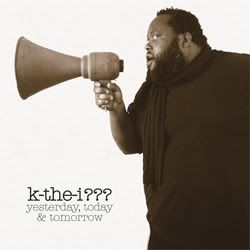
Yesterday, Today & Tomorrow (2008)
I'm typically not one to dump on anyone who tries to experiment with music. I fully support it, actually. This is how genre's expand and how new sounds are brought to us: by artists who aren't afraid to push envelopes and turn off some listeners in favor of attracting those few who really want to hear something new. But as with any experiment, some ideas work and some just don't. Rules are made to be broken, yeah, but some rules are there because they're a really good idea. Take rapping on beat, for instance. Good idea! I mean, if you have a beat, why not follow it, right? Otherwise the beat is wasted. It's there but it's serving no purpose. It's wondering why its creator didn't just use white noise and abstract sounds or something that fits the rapper's freeform style. It dreams of a relationship with a rapper who will respect it and treat it right; take care of it when it's sick and never dare raise their voice at it unless the crescendo obliges. And when it starts to have doubts about the relationship like that, the song will invariably fall flat. That is pretty much my experience with most of Yesterday, Today, and Tomorrow.
To state it clearly: this album just didn't do it for me. The idea of it sounds really appealing on paper. On one side, you have an innovative producer in Thavius Beck, who has found success making great experimental beats for great experimental rappers like Busdriver and Saul Williams. On the other side you have K-the-I???: perhaps the most experimental rapper Beck has ever been paired with. K's stream-of-consciousness style of rapping probably can't claim to make any sense to anyone but himself. The only way he could make his lyrics more abstract at this point would be to invent his own language and words (which I wouldn't put past him, actually).
Sadly, the pairing of these two talents never really meshes well. Beck provides a lot of nice beats and soundscapes, but they seldom seem to have been made with an intent for vocal contribution. It's as if he were working on an instrumental solo album, K-The-I??? approached him about some beats, and Beck simply allowed him to pick through what he had and rap over it. The fact that it was actually the other way around (Beck approached K-the-I???) is a little perplexing. They make a pretty convincing case on songs like "Lead The Floor", but otherwise Yesterday, Today, and Tomorrow strikes me as a nice experimental turntablism album that happens to have some vocals on it.
Plus, the rapping slightly offbeat thing really does bother me. But I've already spent an entire sarcastic paragraph addressing that.
Score: 5/10
"Decisions"
"Lead The Floor"
Wednesday, April 29, 2009
Assemble Head In Sunburst Sound - When Sweet Sleep Returned (2009)
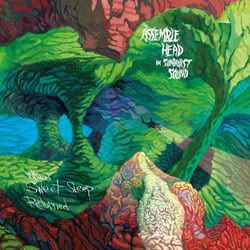
When Sweet Sleep Returned (2009)
Assemble Head In Sunburst Sound exude a certain air in their music that I can only describe, perhaps badly, as a "California cool". Fitting, I suppose, being they're from San Francisco and all, but still not descriptive enough to properly get across their hazy, lethargic space rock sound. I suppose I mean that their sound brings to mind vivid images of sunsets, beaches, relaxation, and maybe even recreational drug use. They're good at creating ambiance, as if their music opens a door to a room and welcomes you into it's warmth. Some would say Assemble Head are a poor man's Comets On Fire. More accurately, I'd argue that they're like Comets On Fire's shy little brother: not as in your face, comfortable living in the shadow, and all the while displaying plenty of their own unique qualities if you actually take the time to get to know them.
Ekranoplan, their 2007 sophomore effort, was the kind of album you didn't realize was awesome until you found yourself wanting to listen to it again. With When Sweet Sleep Returned, they go for the same effect, but with a few immediately noticeable changes. The addition of two new members (Anderson Lanbridge on synth and theramin; multi-instrumentalist Camilla Saufley) helps expand their sound a bit. The use of violin, for instance, adds a nice compliment to songs like "By the Rippling Green". They've even developed somewhat of an alt-country twang to their sound, as is the case with "Two Birds". "Drunken Leaves", with it's distorted guitars and surf rock-style rhythm, is the sole hard-rock track in the same vein as Ekranoplan. The rest is just as laid-back as they've ever been.
While When Sweet Sleep Returned is in many ways similar to Ekranoplan, it's not quite as good. Assemble Head have not gotten worse, nor do they display any particular growing pains. In fact, they incorporate the new elements to their sound fairly well. But at the end of the day, the songs aren't quite as inspired and memorable. Still an overall solid listen, but more than anything it makes me want to dust off Ekranoplan again for a few spins. I think I'll do that, actually.
Score: 7/10
"Drunken Leaves"
"By The Rippling Green"
Friday, April 24, 2009
Doom - Born Like This (2009)
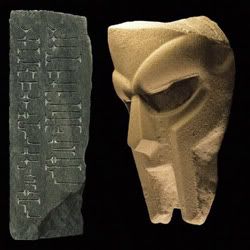
Born Like This (2009)
I was pretty sure Born Like This was going to be the next Chinese Democracy; the Hip-Hop Chinese Democracy, I should say. After so many unfounded release dates went by and MF Doom's impostor antics sullied his legacy a little, I was skeptical that the promised March 24th 2009 release date was actually real. But then three things happened: 1) Chinese Democracy was actually released, 2) official artwork and an official track list for Born Like This surfaced, and 3) I remembered that Dr. Dre's Detox already holds the title of Hip-Hop's Chinese Democracy, making Born Like This more like hip hop's...I dunno, new Jeff Mangum album or something.
So a fortunate day, March 24th turned out to be for me. Along with Mastodon's Crack the Skye, two of my favorite artists in their respective genre's would release new albums that day. It wasn't as fortunate a day for Born Like This. After leaving the record store with both albums in hand, Mastodon won a coin toss I used to determine which one I'd listen to first, and I never really looked back. Born Like This got a few spins here and there, but with nothing immediately striking about the album, I didn't feel the need to stick with it for extended periods. Frankly, the initial letdown proved the album to be the disappointment that I thought it would be but hoped it wouldn't be.
While I can't say that time was great to Born Like This, it did start to catch on a little after a couple of weeks. I'm not sure if I would call it a good album, but it is not as bad an album as I originally felt. Even after a several year hiatus, Doom's flow is still intact for the most part. While there's a noticeable lack of mind-blowing couplets that he'd previously been able to deliver habitually, he's still one of the most skilled rappers out there. He only falters noticeably on "Batty Boyz", if only because the homophobic undertone of the song is highly disappointing to me personally. If he wants to call other rappers' sexuality into question, that's nothing new, but he already did that on Mm..Food's "Beef Rap" ("Yuck, is they rhymers or strippin' males/Out of work jerks since they shut down Chippendales"), and he did it better, with more class, and in less words.
Even with that aside, Doom is missing something here, and it's not just the MF. There have been many a word written about the origin of the tracks on Born Like This and how some were cobbled together from previously released unofficial mixtapes or something of the sort or...I don't know. I can't say I've payed a lot of attention to any of that, but there is a bit of a disjointed feel to the album. The songs really do seem to have been collected from different recording sessions; there's even a couple of tracks that sound almost completely unmastered. Apparently there is a theme connecting the songs, but I've yet to place it. If there is one, I can't say I'm eager to figure it out. Mm..Food had an obvious theme, but it also had a number of good songs that made the listener care about the theme. Born Like This? Not so much. Unfortunately, the good here is outweighed by the average, which is ultimately what the album is.
Score: 5/10
"Absolutely"
"That's That"
Wednesday, April 15, 2009
Mastodon - Crack The Skye (2009)

Crack the Skye (2009)
"Hipster metal". What an unfortunate tag to have placed on you. Having your efforts reduced to nothing but a ploy to attract adventurous Pitchfork readers; a mere curiosity that provides a playlist break between Feist and Panda Bear and seems to say "Hey! Look guys, I actually like some metal!" -- in the same way MF Doom proves indie kids' hip hop chops. Mastodon deserve more credit than that; more than the fickle appreciation of trend-whore hipsters and more than to be marginalized by metalheads claiming the band isn't even metal anymore and therefore hipsters should look elsewhere for their token metal band. It was with this in mind that made it hard for me not to smile at the copper-colored sticker on the front packaging of this album, which reads "Crack The Skye - The New Album From Globally Revered Hard-Rock Masters Mastodon" There, "hard-rock"; in one fell swoop proving the metalheads right and the hipsters wrong and moving the fuck on with it. Ending the pointless debate and challenging listeners to take their music for what it is and not what the listener thought it was or wants it to be or what is and isn't hip. Or, you know, something like that.
So anyway, Crack the Skye. Actually, first...well, I don't know about you, but I haven't gone back to Blood Mountain that often in the past two-and-a-half years. At first I saw it as a marked improvement for Mastodon: further embracing the prog-metal direction they took and absolutely nailed with Leviathan, and getting tighter and more technical as a band. As time went on, though, I began to question the use of the word "improvement". It was a progression alright, but it wasn't necessarily better than what they'd done previously, because other than a few spins of "The Wolf Is Loose" (great) and "Capillarian Crest" (awesome), I could probably do without hearing the album again in its entirety. It's a good enough listen in the moment, but the songs just don't stick. But Crack The Skye? Sheeeeiit. I doubt I'll be saying the same about Crack the Skye down the road.
They haven't gone back to the drawing board or made any dramatic changes, but they've kept moving in the same direction: more prog, more crazy (some might say "stupid") concepts, more guitar godliness, but now with more focus and 25% more epicness. At 50-minutes divided into seven tracks, they didn't do their label's PR team any favors. Actually, they gave them one proper single: "Divinations", which has the shortest length (three-and-a-half minutes), the largest hook, and arguably the most blistering guitar solo in an album filled with them. It's obviously there to keep the label heads' hair intact, yet it doesn't seem forcefully tacked-on even if it is the weakest track. The other tracks are given a bit more time to simmer and they make good use of it; shifting and changing riffs at will and bringing it back together by the time it's all over. Take "Oblivion", probably their first album opener that doesn't assault your speakers from the 0:00 second mark. Three different vocalists have their turns at the mic, the best of which comes from Brent Hinds, who seems to have been looking to the Motown catalog (between drunken encounters with other bands) because he really brings the soul to this track, as well as others. Fear not: it's actually an asset; not anywhere near as awful as I've described it.
I''m going to be abrupt here, because I could potentially go on for a lot longer counting the ways in which this album kicks ass, describing in detail my favorite moments and whatnot (top two: Scott Kelly's excellent contribution to the title track, and the earth-shattering, devil horns-inducing final minute of "Quintessence"), but it's just going to get redundant and I like to restrict my use of the word "awesome" to two or less times per review. So here's the album's only flaw: the central riff for "Ghost Of Karelia" is blatantly recycled from the Blood Mountain song "Sleeping Giant". There, that's about it.
Crack the Skye is an incredible album. It's Mastodon's most complete work yet and undoubtedly the greatest thing they've ever done and probably will do. Only four months into the year, hard-rock, hipster metal, or whatever you choose to call it, has it's best album of 2009. I can't really say it more clearly than that.
Score: 9.5/10
"Oblivion"
"Quintessence"
Friday, April 10, 2009
Gil Scott-Heron - Pieces of a Man (1971)
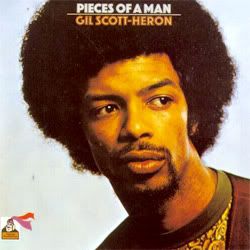
Pieces of a Man (1971)
Let me just get this out of the way: Gil Scott-Heron can't sing. Well, he can, but not well. One of the things that made the ballads of such soul artists as Curtis Mayfield and Marvin Gaye so compelling to listen to was the fact that they were being projected through the most endearing vocal cords on the planet at the time. Gil Scott-Heron certainly has the song arrangements to compete with them, but not the voice. I want to say that that's part of the reason why Scott-Heron is such an underground artist. He's better known for his powerful spoken word recordings, which are widely considered to be the precursors of hip hop. But his aspirations to be more than just a poet, while admirable, is probably what kept him from achieving greater success, rather than restricting him to lesser.
Though he never reached Mayfleid or Gaye's levels of popularity, you've heard of Gil Scott-Heron before. Or at least you've heard the saying "The Revolution Will Not Be Televised" before. This is the guy that originated it. Also featured on his hard to find debut Small Talk at 125th and Lenox, an updated version of the song with full instrumental backing opens Pieces of a Man. The songs' cult popularity doesn't exist for naught; it's absolutely flawless, and sadly still semi-relevant (update the names of the actors and politicians mentioned and it could've been recorded this decade...though the revolution never really comes as violently as anyone imagines). Perhaps the only complication with leading the album off with "The Revolution Will Not Be Televised" is the expectations it places on the rest of the album. If you're looking for any more raw spoken word tracks, prepare for disappointment: Pieces of a Man goes the soul/vocal jazz route for its remainder.
That may be a deal-breaker for some, but keep in mind that Gil Scott-Heron is a talented artist, so not all is lost. True, a few of the songs are pretty generic-sounding by today's standards (I'm halfway sure that "When You Are Who You Are" was used as background music in an auto insurance commercial a few years back) with cringe-inducing lyrical clichés, but thankfully there are a few standouts that make good use of storytelling to keep the listener interested. "Lady Day and John Coltrane" is an up-tempo, groovy track about drowning your sorrows by listening to your favorite musicians. "Home Is Where The Hatred Is" keeps the pace up with a tale of leaving a tumultuous living situation. The title track is a downtempo piano-driven ballad that tells about a father's breakdown after being laid off of his job.
The songs are carefully composed in such a way that works well for the vocal ability that he does possess, but at the end of the day you can't help but wonder what a more talented singer might've been able to accomplish with the same songs. Perhaps more interesting would've been to hear them in spoken word form, though I suppose there's no point in dwelling on what could've been. I can't blame an artist for wanting to branch out of his comfort zone, so taking this album as it is, you could do a lot worse.
Score: 7/10
"The Revolution Will Not Be Televised"
"Lady Day and John Coltrane"
Monday, March 30, 2009
Bombshell Baby of Bombay: Bombay Connection Vol. 2 (2006)
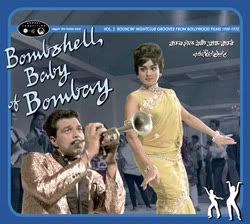
It's always interesting to see the ways in which western musical styles manifest themselves in non-western countries. The first volume of The Bombay Connection explored Hindi funk music featured in Bollywood films of the 70's and 80's, and it's an understatement to say that the results were unique. They were also a breath of fresh air to a genre that has not seen much innovation since...well, the 70's and 80's. One needed to look no further than the world's second most populous country for fresh ideas in funk music.
In volume two of The Bombay Connection -- Bombshell Baby of Bombay -- expert crate digger Edo Bouman has again collected an esoteric mix of Bollywood music, this time focusing on swing and rock and roll music created in and around the 1960's. As with volume one, western listeners shouldn't expect anything completely familiar sounding. The sound is laced with various elements of traditional song and instrumentation that have been a staple of Bollywood film music since the advent of "talkies", but it's no less energetic than its western complement.
The most accessible song of this collection is given to us by Mohammed Rafi -- "the voice of Indian rock n' roll". "Jan Pahechan Ho" has already been brought to the attention of western listeners through the movie Ghost World, which is why it's better known to some as "the song that Thora Birch's character was rocking out to during the opening credits". With a memorable surf riff and an absolutely killer brass section, it's easy to see not only why it was chosen to open the film, but also why it's included on this compilation. Rather than give more of the same, Bouman goes for variety. "Ek Bottle Hogal Mein", Kishore Kumar's drunken ode to booze, incorporates a mildly middle eastern feel to the mix, while Asha Bhosle's "Sambhalo Sambhalo Apna Dil" brings a bit of a Latin flavor.
There's something about Bollywood movie theme songs that are just more fun and appealing than those of Hollywood. Perhaps it's nothing more than the fact that the western-style compositions are familiar to me and their Hindi counterparts are not. Either way, it makes me want to familiarize myself with the films more so than the five minute "Indian Superman" clip I've seen on Youtube.
Score: 8/10
"Jan Pahechan Ho" by Mohammed Rafi (composed by Shankar-Jaikishan)
"Pretty Pretty Priya" by Anand Prayag & Chorus (composed by Kalyanji-Anandji)
Friday, March 27, 2009
Love, Peace & Poetry: Turkish Psychedelic Music (2005)
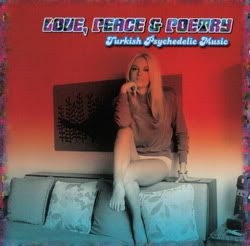
I didn't really notice how criminally absent Turkish music was from my collection until I heard this album; or how little I knew about Turkey as a country; about its history and its people. With the ninth installment of the Love, Peace, and Poetry compilation, which explores obscure world psychedelic music, Normal Records and QDK Media have opened my eyes. Does that mean that, thanks to this compilation, I can now give you a detailed synopsis on Turkish history, pop culture, and current events? Nope, but I can damn sure assume that their musicians in the 70's must've had some pretty potent drugs at their disposal.
Though the album is subtitled Turkish Psychedelic Music, the songs on here can more accurately be described as Anatolian rock, which was the name given to music that fused traditional Turkish folk with Western-style rock. Despite following in the footsteps of popular American and British psych bands, the songs on this compilation, with its infusion of traditional Eastern instruments, is actually more deeply representative of what most people today would classify as true psych rock. It's hard to argue this when listening to songs like "Yağmur" by Erkin Koray -- an artist that the liner notes calls "the most psychedelic rocker ever from Turkey" -- or the lead-off track "Bundan Sonra" by Selda, who contributes to two songs to the compilation. Her other song, "Ince Ince Bir Kar Yagar", is my favorite track on the album. It's a traditional türkü arrangement with strong political lyrics that I don't understand a word of, but the emotion of her often harsh delivery easily gives away the songs' urgent and deeply personal tone, which somehow allows me to look past the grating quality of the vocals.
Overall, this Love, Peace and Poetry collection should appeal to any fan of psychedelic music. It's a collection of music so strong that it's singlehandedly sparked my interest in the culture from which it came. Another demonstration of the power of music, I guess.
Score: 8.5/10
"Kara Yazi"
"Ince Ince Bir Kar Yagar"
Monday, March 23, 2009
Khanate - Clean Hands Go Foul (2009)
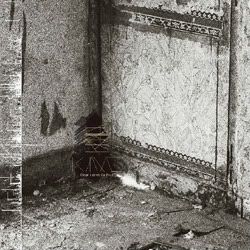
Clean Hands Go Foul (2009)
Khanate's sudden disbandment in 2006 was a blow to the drone doom metal world; a world not particularly large in the first place, but also one not particularly diverse. This is precisely why Khanate stood out so easily. With metal veterans like James Plotkin and Stephen O'Malley (of SunnO))) fame; a household name to some) working with a vocalist of Alan Dubin's caliber, they were bound to reach heights not easily accessible to their peers. Sadly, we only got three proper albums from this venerable supergroup of sorts before...actually, wait...make that four.
Information on Clean Hands Go Foul -- whether it is an official release or a collection of b-sides, outtakes, etc. -- is hard to come by. The most definitive definition seems to call it the "long lost" Khanate album, possibly not originally meant to see the light of day. If that's the case, it makes their break-up all the more infuriating, as even their throwaway material trumps most of what you'll ever hear from drone doom. "Wings From Spine" is probably the most immediate the band have ever been, finishing the track in a brisk (for them) sub-seven minute time-frame and establishing the dark, catastrophic feel the band is known for. Alan Dubin's voice is once again the centerpiece of this sound; his deranged shrieks and growls adding immeasurably to the unbalanced nature of the music.
Some have complained about the Gollum-ish quality (as in the Lord of the Rings character) of Dubin's vocal style, which is a good way to put it even if it is meant to be belittling. But it's still so captivating to listen to that I was convinced that he could carry an album on his voice alone. "Every God Damn Thing" did a good job of proving me wrong on that. A 32-minute so-called "diss track" with sparse instrumentation and electronic buzzing noise, Dubin more or less carries the track, and the results are pretty boring and meandering. There's a glimmer of hope at about twenty-one minutes in where some guitar pops in and it seems things will finally take off, but as quickly as it comes it goes away, and ends up serving as a colossal middle-finger to anyone patient enough to listen up to that point.
Initially I felt that this song was a terrible way for the band to close out their career with, but in retrospect, maybe it isn't. If anything, it makes the me better appreciate the contribution of the guitar and drums, and the atmosphere they create that makes Dubin's vocals so unsettling. But either way, the album could've done without the song.
So long Khanate; you will be missed.
Score: 7/10
"Wings From Spine"
Friday, March 20, 2009
Os Haxixins - Os Haxixins (2009)
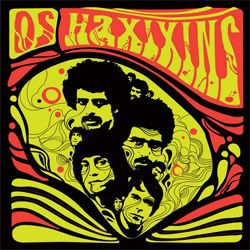
Os Haxixins (2009)
If there's one age-old query that can be answered by listening to Os Haxixins' self-titled debut, it is this: what happens when a group of stoners get their hands on a vintage organ? Welp...here ya go! Add in some vintage amps, guitars and lo-fi recording equipment and you have yet another band that was formed forty years too late. They certainly aren't the first band to follow this trend but, considering my favorite album last year was from the Swedish psych band Dungen, this is one trend I personally don't mind bands following.
With a look as vintage as their sound, Os Haxixins made a name for themselves playing around São Paulo for four years before they got around to actually recording. Originally release as a vinyl-only album in Portugal in 2007, this CD reissue comes to us courtesy of Pittsburgh's Get Hip Records, complete with two bonus tracks (the instrumental "Raios" and "Please Forget", one of three English language tracks); but unfortunately absent of any clues as to how to actually pronounce the bands' name. Few things make me feel so incredibly gringo than trying to say it without struggling, but I've settled on either "os hazizins" or "that one Brazilian band I've been listening to". Both seem to get the point across.
Though there are certainly psych elements to Os Haxixins sound, the fuzzed out guitars, slightly muffled vocals, and catchy two-minute song structures place them more in garage rock territory. And as discussed, all of the songs, for better or for worse, are dominated by the organ. This isn't necessarily an automatic flaw as they actually use it quite well most of the time, adding a dimension to their sound that many similar bands lack. They can rock out with it, as they do on the opener "Onde Meditar (Imi-dà)" and on the excellent "Àcido Fincado", or they can do a more laid-back, spy music feel, as on "Depois Eu Volto (Gimme)". But their options, or perhaps just their ideas, are somewhat limited with the instrument, and throughout sixteen tracks of organ onslaught, it starts to sound a little redundant.
Overall, though, Os Haxixins is a pretty enjoyable listen that's true to the band's garage rock influences: fun, fast and loud, even if lacking a little depth.
Score: 7/10
"Depois Eu Volto (Gimme)"
"Àcido Fincado"
Friday, March 13, 2009
The Watts Prophets - Things Gonna Get Greater (2005)
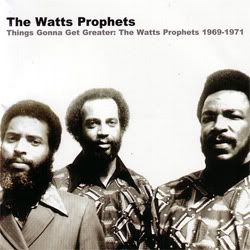
Things Gonna Get Greater (2005)
It doesn't matter if you agree with the politics of the Watts Prophets. It really doesn't. Partly because they probably wouldn't care what you think, and mostly because nitpicking their politics is missing the point entirely. I could go on for days about the sense of paranoia or the contradictions of what they discuss (by their definition, the only truly black people on earth can be narrowed down to themselves and Malcolm X, and even adding themselves to the list raises some doubt in their minds). I could sit here and be offended about the fact that they have nothing good to say about me, my college education, my support of birth control, my natural hair, or especially my white wife, but I realize that none of that matters here.
Things Gonna Get Greater is a compilation of the Watts Prophets' first two albums: 1969's On the Street in Watts, and 1971's Rappin' Black in a White World. Both albums are excellent (for the record: I slightly favor the ladder, though the former seems to get more praise). Together they are almost overwhelming. Often complimented with a light backing of jazzy bass, bongos and trumpet grooves (with some piano and a Capella melodies), the Prophets deliver poems filled with emotion and frustration of the world around them; perfectly encapsulating the anger that must have existed in the time period leading up to, during, and following the Watts Riots of 1965. Regardless of the conclusions they've drawn, their anger is justified. It is as real as the poverty and brutality faced by the black community in 1960's Watts, and it makes for one of the most intense listening experiences of my life.
This is not just an album, it's a historical statement. It should be required listening to black history departments in liberal arts colleges nationwide. It does not matter if you agree with all of it. I don't agree with much of it. But taking offense to it isn't constructive because it clouds the very real frustration from which this was born. Enjoying this album is not an endorsement of everything the Watts Prophets stand for, it's simply evidence that you still have the ability to appreciate a work of art when presented with one.
Score: 10/10
"Dem Niggers Ain't Playing"
"Part-E, S"
"Black Pussy"
Wednesday, March 4, 2009
...And You Will Know Us By the Trail of Dead - The Century of Self (2009)
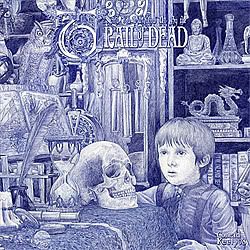
The Century of Self (2009)
So....how 'bout those Detroit Pistons, eh (stay with me, non-sports fans)? Admittedly not a team I payed a lot of attention to before the 2004 NBA Finals, where they faced off against a juggernaut of a Los Angeles Lakers team, which featured arguably the greatest coach (Phil Jackson), center (Shaq), clutch shooter (Robert Horry), and post-Jordan all-around player (Kobe) all on the same side (well, for the most part). The debate surrounding the matchup wasn't so much whether the Lakers could capture their fourth title in five years, it was how many games it would take them to do it. The Pistons, however, had other ideas. They not only beat the Lakers, they methodically destroyed and embarrassed the Lakers to such a degree that it prompted one journalist to refer to the series as "the five-game sweep" (the Lakers barely eeked out one win thanks to the last-second heroics of the aforementioned Robert Horry). Almost overnight, everybody in the NBA was paying attention to the Detroit Pistons.
The Pistons weren't by any means a flashy team with any outstanding players doing exciting things, they were average or above average players who happened to be outstanding when together. After the Pistons carried their momentum all the way to the seventh and final game in the next years' NBA Finals (where they fell to the Spurs), the next two off-seasons would see them lose both their head coach and star center respectively, something they never quite recovered from. And while they were still winning games and having flashes of brilliance, they had gotten noticeably comfortable and complacent, failing to turn it on when they had to. They often appeared so bored with the idea of a basketball regular season that they hardly seemed to care by the time it mattered most: the playoffs. Today, the Pistons are becoming farther and farther removed from the days among the Eastern Conference's elite teams, so thoroughly muddled in an obvious period of transition and rebuilding that only a glimmer of their past glory remains while a hope for future dominance is on the horizon; though at this point, just barely so.
I don't really have to spell this out for you, do I?
If I were to grade The Century of Self on its first fourteen minutes, I would be hailing the bands' sudden return to form, praising them for successfully melding the energetic songs of their past with the bloated, often melodramatic arena rock sound they've attempted on their more recent efforts. Following the buildup track, "Giant Causeway", "Far Pavilions" sounds plucked straight out of the Madonna/Source Tags-era of their career; the loud-soft-loud dynamic pulled off as successfully as they used to do it (before the soft parts started feeling like awkward, confused transitions to extend the song length). The album then jumps straight into the dramatic magnum opus "Isis Unveiled". I'll spare the fancy wording: this song fucking kills. Yeah, it sounds suspiciously Muse-like (I spy a "Knights of Cydonia" inspiration), but it makes up for any faults with sheer aggression. This is the least lethargic they've sounded in years.
But the album goes on, and proceeds to hit an immediate road block in "Halcyon Days", which isn't a bad song, but feels right on par with Trail of Dead's recent output -- and as you can guess, this isn't a compliment. Luckily, the band gets things rolling again with a trio of good tracks in "Bells of Creation", "Fields of Coal", and "Inland Sea". With these songs ("Fields of Coal" most notably), it's obvious the band, of which the founding members are now well into their 30's, have somewhat regained that certain youthful energy that seemed to drive their earlier work. They're having fun playing again, and I feel young again listening to them.
Regrettably, they can't keep it up to close the album. With a series of forgettable tracks (save for "Luna Park", which is memorable only because it's the most obvious failure: an attempted piano-driven soft-rock ballad), The Century of Self ends with a bit of a whimper. In the end, it's hard to classify whether this album is a success or not. It's most definitely better than their last album, So Divided, and many would agree that it also tops 2005's World's Apart (I'm one of the few that would debate this). It certainly isn't Source Tags & Codes, but at this point no rational person expected it to be so.
My personal vote is to consider it a marginal victory. So Divided was a mess so difficult to defend that I was ready to give up on the band altogether. With The Century of Self, they've shown enough progress to convince me to stick with them through their arduous restructuring process. Like the Pistons, I'll continue to watch their development and hope for the best, but I'll be less surprised if they don't come through when the game's on the line. There's always next year, anyway.
Score: 6.5/10
"Isis Unveiled"
"Fields of Coal"
Monday, February 23, 2009
Dälek - Gutter Tactics (2009)
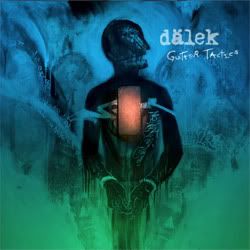
Gutter Tactics (2009)
Ignore (if you can) the fact that this duo's name has thrust the MC into the forefront. Dälek may be the name of the band and the rapper, but DJ Oktopus' unique production has been the driving force behind their hard-to-place sound in the realm of music, borrowing as much from hip hop as from experimental noise, industrial, shoegaze, drone, and (for this album's title track especially) drone doom metal. In fact, one of the biggest mistakes people make when exploring Dälek is to approach them as a rap group. And while hip hop with a political flare is certainly part of the overall package, one shouldn't go into their albums expecting anything resembling Public Enemy or Dead Prez.
As discussed, production is key with Dälek albums, and with Gutter Tactics, Oktopus gives the most consistent and occasionally brilliant effort he's ever managed. Finding a balance between the harsh noise of Filthy Tongues and Absence, and the softer albeit sometimes uninteresting melodies of Abandoned Language, Gutter Tactics is at times dirty and raw but without being obnoxious, and other times bleak but without ever getting boring. If they hadn't already planned on releasing an instrumental version of this album, they should seriously consider it. It'd arguably be the best instrumental hip hop/post-rock/electronic album in recent memory.
If that's taken as a criticism of the vocals, it pretty much is. Oftentimes muffled, incomprehensible, and buried in the mix, Oktopus' handling of the vocals are easily the weakest part of his effort on Gutter Tactics. It also doesn't help that Dälek seems as if he hasn't cheered up much (though it's difficult to tell for sure; the liner notes don't contain any lyrics), not that anyone should have expected as much, but in keeping with his dire outlook he falls victim to a common failing of political hip hop.
Look, there's a reason why Public Enemy had Flava Flav. People can only take so much of hearing how fucked up and racist the world is before recoiling. Things aren't perfect by any means, and this type of subject matter shouldn't be ignored, but Dalek feeds it in such heavy doses that it distracts from using their music as a form of escapism. Yes, Dälek, I actually did know who Medgar Evers was (referring to the line "Tell the truth you never knew who Medgar Evers was", stated in one track). He faced a lot of obstacles and was killed trying to give people like you and I more opportunities for a better future, and his goals have since largely been met, so I'm pretty sure he'd scoff at any mention of how bad you have it.
Score: 8.5/10
"Los Macheteros/Spear Of A Nation"
"Gutter Tactics"
Friday, February 13, 2009
Ocean - Pantheon of the Lesser (2008)
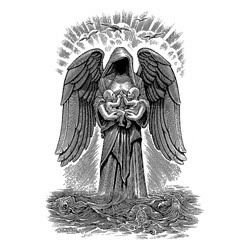
Pantheon of the Lesser (2008)
Ocean's 2005 debut album, Here Where Nothing Grows, was a fantastic display of heavy, bleak, depressing, suffocating, atmospheric doom metal. For 2008's Pantheon of the Lesser, the band have changed their game, giving us two new extended tracks of heavy, bleak, suffocating, depressing, atmospheric doom metal...WITH A FEMALE VOCAL ELEMENT! Whatever. It's not like doom is known for its sea changes (zing!). They have their niche and they're sticking to it.
Even though the band haven't changed by leaps and bounds, the three year gap between the two albums have been largely good to Ocean (not to be confused with Germany's THE Ocean; that band does sludgy prog-metal, this is doom. DUH!). Any band with the skills to make a thirty-five minute track worth repeated listens must be doing something right. "The Beacon" blasts the album open with a heavy drum beat and a stroke of the guitar, and seems to hint at a fast start until that beat is left to linger in the air for several seconds, at once reminding the listener who they are. "Fast start" my ass; Ocean do everything slow.
The song builds, slowly of course, and the growling vocals sound more like the heavy howling winds of a thunderstorm. The song climaxes with the introduction of said female vocal element, at first singing, then screaming as the music begins to envelope her and the listener simultaneously. It's not very unlike the title track on Ancestors' 2008 debut, Neptune With Fire, but the styles are different enough between the two bands to avoid that feeling of déjà vu. After "The Beacon", the main job of the closing track, "Of the Lesser", is to not ruin the momentum; a job that it completes with flying colors, almost to the point of surpassing the excellent opener. At a scant (in comparison) twenty-three minutes, it's leaner on instrumental sections but no less epic in proportion.
For a time, the climax of "Of the Lesser" conveys a feeling of optimism...before punishing the hell out of that nonsense with a series of bass heavy, pummeling drum beats similar to the one that opened the album. "Save the optimism for post-rock bands", they seem to say. "We're all about dooooooom."
Score: 8.5/10
"Of the Lesser" (excerpt)
Wednesday, February 4, 2009
Buraka Som Sistema - Black Diamond (2008)
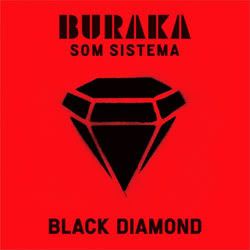
Black Diamond (2008)
It's probably foolish to debate how much attention this album would've gotten had M.I.A. not been on the lead single, "Sounds of Kuduro", so I won't spend too much time dwelling on the hypothetical. But the fact that people have actually heard of Buraka Som Sistema can probably thank she of the hottest single of 2008 (only the Amish have not heard "Paper Planes" by this point). Otherwise, this band would've likely remained unknown outside of their territory except by the most astute hipsters, who surely would've used it to throw in the faces of the less aware ("Yeah, M.I.A.'s okay, but I like Buraka Som Sistema's style better").
As the lead single suggests, Buraka Som Sistema specialize in a style of music called Kuduro, born in Angola and popular in Portugal and surrounding areas. You'd be forgiven for never having heard of it, but save yourself the trip to Wikipedia: there's very little to distinguish Kuduro from most other forms of high-BPM electronic music. It's rhythmic, danceable rave-style music, and I'm willing to wager that 4 out of 5 listeners can't tell the difference between Kuduro and any other forms of rhythmic, danceable rave-style music. You could note Kuduro's mild African flavor and the political nature of its lyrics (if any), but you'd more or less be splitting hairs.
Like most rave-style music, Black Diamond comes dangerously close to overwhelming listeners with the beat. The album starts off strong, with the aforementioned "Sounds of Kuduro" as well as "Kalemba (Wegue Wegue)" providing early highlights, but midway through the album it all starts to get tiring, and not necessarily because of a drop in song quality. The album is actually pretty consistent, but with this style of music, rigid consistency often leads to boredom.
Thank goodness, then, for "New Africas Pt. 1 and 2", which comes out of nowhere and gives Black Diamond a much needed change of pace; slowing things down before introducing a dark, brooding, dub-style beat. The two parts of the song only play for about a combined six minutes, but it's more than enough time to save this album from the mediocrity that it had been driving toward.
Buraka Som Sistema is unlikely to follow in M.I.A.'s footsteps in terms of popularity, but a follow up album that improves upon what they've done on Black Diamond may give them a legitimate shot.
Score: 7/10
"Kalemba (Wegue Wegue)"
"New Africas pt. 2"
Friday, January 30, 2009
Nomo - Ghost Rock (2008)
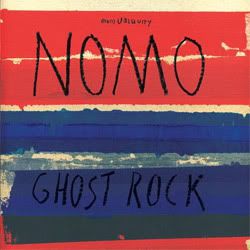
Ghost Rock (2008)
What lying bastards! There's nothing even remotely paranormal about this music! My research found that everyone involved in this record was alive while recording it. Furthermore, they're still alive now! Preparing for a Spring tour no less!
And just listen to the music; it's full of life! Not at all ghostly in my opinion. Well, the electric buzzing that opens the album on "Brainwave" maybe sounds a little creepy in the right setting, but it certainly didn't scare me! After that, the album just gets more and more upbeat, like a dance album actually; and how many ghosts do you know who dance!? Ridiculous. Just listen to that percussion on songs like "All the Stars" or "My Dear". Ohhhh scaaaarrrry...NOT! How can I be scared when the music just makes me want to bob my head to the beat? Poorly executed, I say. Or how about all those enormously catchy brass parts like on "Rings" and "Three Shades"? They aren't haunting at all, they're infectious. They make me want to bust a move, not piss my pants!
As if the "ghost" part of the title wasn't suspect enough, how about the "rock" part? I mean, maybe jazz-rock or afro-rock at best, but certainly not rock rock. This sounds nothing like Black Sabbath! Now there's a ghostly rock band for you. That cover for their self-titled album gave me the creeps! Plus Ozzy Osbourne dresses in all black and like, ate a bird or some shit. And he usually at least looks kinda dead. I'm sure he wouldn't approve of this Nomo band going around talking about "ghost rock" at all. Not one bit.
I don't know who you're trying to fool with your deceptive album titles, Nomo, but I've got you figured out. I'm onto your game!
Score: 8.5/10
"Round the Way"
"Three Shades"
Friday, January 23, 2009
The Walkmen - You & Me (2008)
The Walkmen
You & Me (2008)
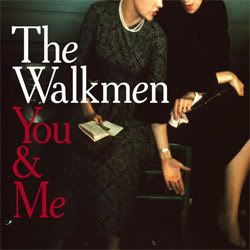
Everyone Who Pretended To Like Me Is Gone, the Walkmen's debut, seemed to give the air of being the calm after a storm that we weren't around to witness; thriving on minimalism and distance, and was equal parts stark and optimistic. I suppose it's only natural that the sound on You & Me, their fourth proper album, is similar. The storm this time having been their previous album, A Hundred Miles Off.
And on that subject, I must say that I think A Hundred Miles Off got a bad rap. Many of the complaints about it seemed to focus on the voice of lead singer Hamilton Leithauser, which often sounded strained and hoarse. I always saw it as a part of an energy to that album that I think went under-appreciated; part of the excess that I felt the album was going for from the start. There was a wildness to it; not really a dance or a party album, just a loud one. The drumming was more frantic, the guitars mixed higher, the percussion used more gratuitously while the toy piano collected dust along with all of the other novelty instruments that previously complemented the bands' sound. Because they weren't fucking around this time.
All signs seemed to indicate that they were giving it all they had, vocal chords be damned ("He lost his voice, but he's all right", he sings on one track), and when it was over, I felt that I'd heard the last of the Walkmen, because I couldn't imagine that they had anything left to give. I awaited the announcement of a break-up or hiatus, ready for my hunch to be proven right. Instead, we got announcement of a Harry Nilsson cover album, a book, and eventually, You & Me.
The aforementioned similarities of this album and their first are many. Despite its spring release date of March 2002, Everyone Who Pretended To Like Me Is Gone (EWPTLMIG from now on) always struck me as a rather wintry album. Same with 2004's Bows + Arrows, now that I think about it. The songs evoke a certain coldness; images of snow and ice, both obvious ("The Blizzard of '96", "No Christmas While I'm Talking", "The North Pole") and not so obvious. The lyrics feel like a product of cabin fever, with themes of reflection, dreams and resolution. The sound carries as if played in a cold, empty room on a cold winter night. The crisp guitars and piano keys created, for lack of an ability to explain it better, a frosty feel. The sound on You & Me more or less continues this trend, but still sounds fresh rather than a weary band just trying to recapture past glory. These are theme songs for December in the Midwest.
The only flaw, which is inherited from EWPTLMIG, is that it's a couple of songs too long. The opening notes of "I Lost You" leave me wondering why the album is still on, and by the time "If Only It Were True" comes to a close, it's a welcome event, since I'd already sort of lost interest in the album six and a half minutes ago. That aside, another success for one of the better, more consistent indie rock acts out there.
Score: 7.5/10
"On The Water"
"Canadian Girl"

 Posts
Posts


